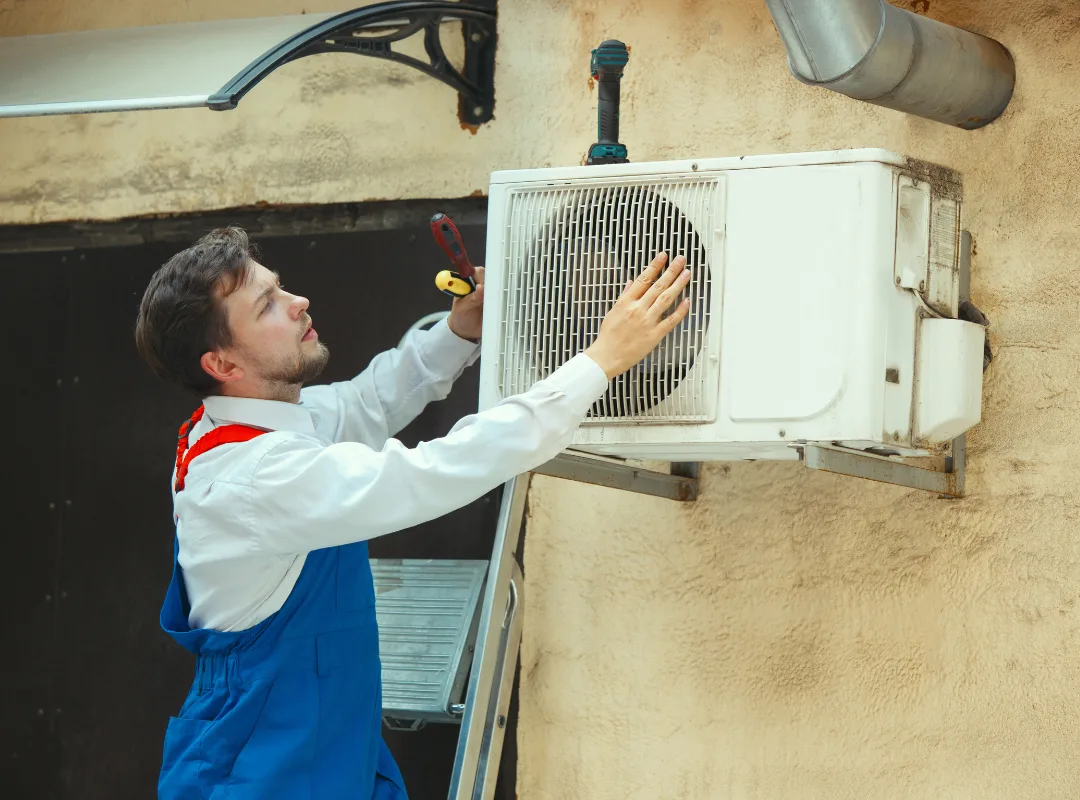
Why Is My AC Running But Not Lowering Humidity Levels?

If you’re asking, “Why is my AC running but not lowering humidity levels?” This guide is for you. This is a common issue, and it points to a problem with your system’s ability to perform one of its most critical jobs: moisture removal. Your AC system is designed to do more than just produce cool air; it’s also your home’s primary tool for humidity control. When it fails at removing humidity, your indoor comfort plummets, and your indoor air quality can suffer. Read on!

How Your Air Conditioner Manages Indoor Humidity

Your air conditioner pulls warm indoor air from your living space and passes it over a set of cold evaporator coils. As the humid air makes contact with these coils, the significant temperature difference causes the moisture in the air to condense into water droplets. Think of it like the condensation on a cold glass of iced tea on a hot day.

This collected water drips off the coils and is drained away outside. The result? The air that gets pushed back into your home is both cooler and drier. Effective moisture from the air is removed, and you enjoy comfortable, non-sticky cool air.

AC Is Cooling But Not Removing Humidity
Window AC Is Cooling But Not Removing Humidity

But when this process gets disrupted, you end up with high humidity. If your system seems to be cooling but still struggling overall, reviewing the most common reasons for AC not cooling properly can help identify related performance issues.

An Oversized AC System

An oversized AC system cools the air so quickly that it reaches the thermostat’s set temperature in just a few minutes. Then, it shuts off. These short run times are a major problem. Frequent short cycling is a common issue, and understanding air conditioner turning on and off can help you recognize whether improper sizing is the root cause.

Why? Because the AC needs to run for longer, complete cooling cycles to have enough time to pull excess moisture from the air. When the system is constantly turning on and off, it’s not running long enough for the evaporator coils to get cold enough to effectively condense water.

The result is a room that feels cool but damp. This is a classic sign that your unit might not be properly sized for your home’s square footage and cooling needs.

Other Common Causes for High Humidity Levels

From simple maintenance fixes to more serious mechanical problems, here are other potential root causes.

Dirty Evaporator Coils or Air Filters

For your AC to remove moisture, warm indoor air must make direct contact with the cold evaporator coils. If those coils are caked in dirt and grime, they can’t do their job. A layer of filth acts as an insulator, preventing the coils from getting cold enough to make the air condense.

Similarly, dirty filters create restricted airflow. Poor airflow means less humid air is reaching the coils in the first place. Regular maintenance is key. Homeowners searching for a dependable HVAC Company in Nashville often find that routine coil cleaning and airflow inspections dramatically improve humidity control.

Replace your air filters every 1-3 months and schedule a professional cleaning for your evaporator coils at least once a year. If you’re unsure how often replacement is needed, reviewing how often I change the air filter can help maintain proper airflow and moisture removal.

Call Us Today

24 Hours a Day, 7 Days a Week.

Leaking Ductwork

If it has leaks, you’ve got a big problem. Leaky ductwork can pull in humid, unconditioned air from places like your attic, basement, or crawl spaces. This humid air then mixes with the cool, conditioned air your AC is producing. You can also look for common signs of leaks in AC ductwork to determine whether duct leakage may be contributing to excess indoor humidity.

Your system is forced to work harder to both cool this extra warm air and deal with the added moisture. Hence, even with the AC running, the humidity levels in your living space remain high.
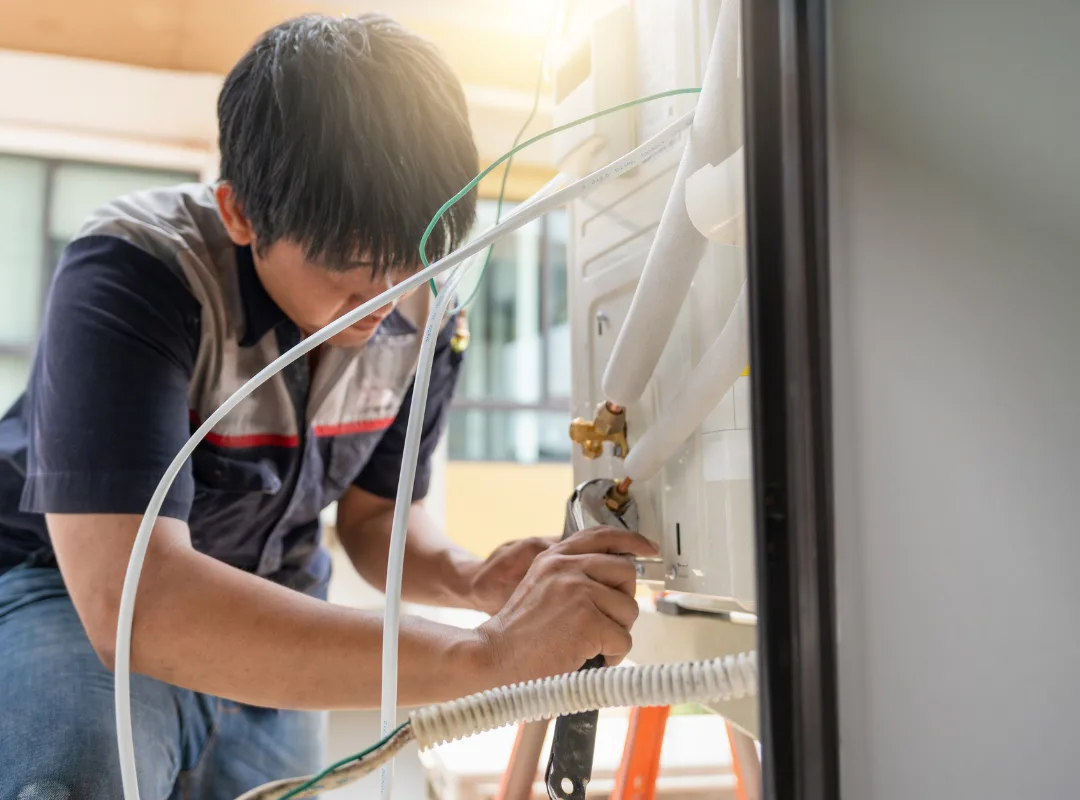
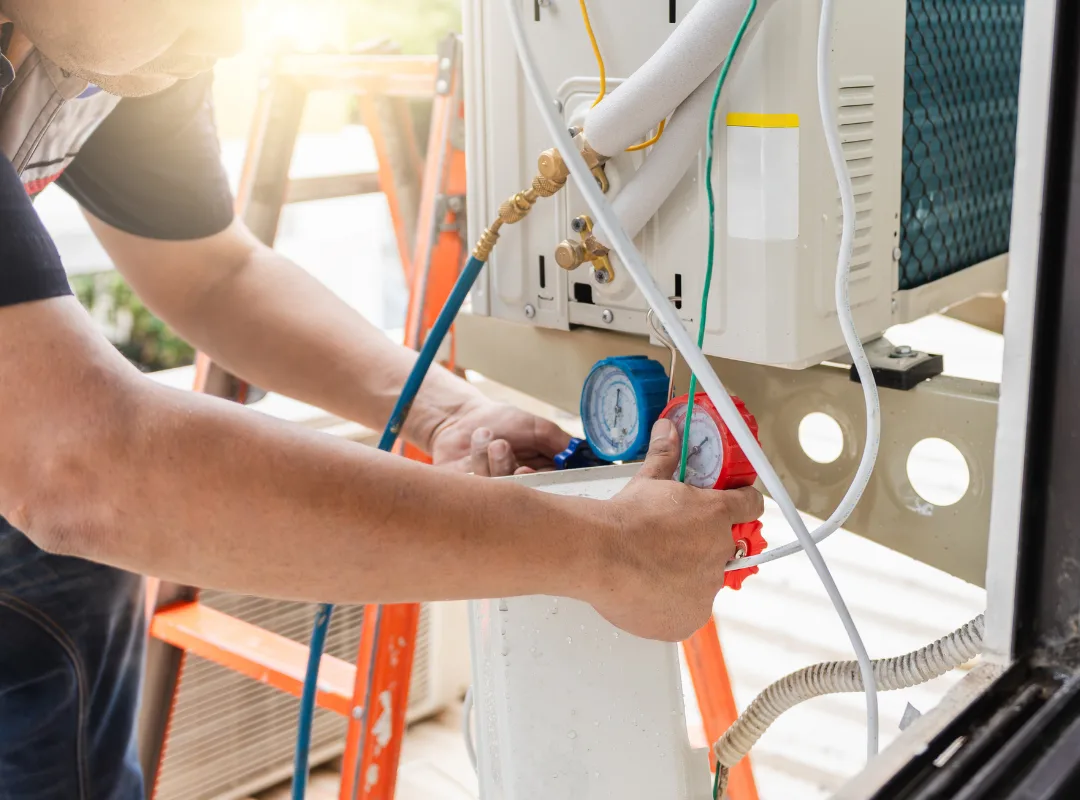
Does Air Conditioning Increase Or Decrease Humidity
How To Reduce Humidity With AC

Professional duct sealing can be a game-changer for the system’s efficiency and indoor comfort. Working with experienced HVAC Experts in Springfield ensures duct leaks are properly diagnosed.

Incorrect Thermostat Settings

If you run your fan on “ON” instead of “AUTO,” the fan will blow continuously, even when the air conditioner isn’t actively cooling. When the cooling cycle stops, the moisture that collected on the evaporator coils doesn’t have a chance to drain away completely. Then, the still-running fan blows that moisture right back into your home.

It’s the substance that allows the evaporator coils to get cold. If refrigerant levels drop, usually due to a leak, the coils won’t get cold enough to effectively remove enough moisture from the air.


Signs of low refrigerant include hissing sounds, frozen evaporator coils, and an AC that runs constantly but doesn’t cool well. This is not a DIY fix; you’ll need an HVAC professional to find and repair the leak and then recharge the system. Ignoring refrigerant issues can lead to serious damage. If your system is running but not delivering proper cooling performance, exploring why the AC units blow warm air instead of cold air may help you identify the problem.

Solutions for Better Humidity Control

If your home feels humid even with the AC on, there are several paths to a solution. The first step is to identify the root cause.

Check the Simple Stuff

Start by checking your air filter and thermostat settings. A clean filter and the correct fan setting are easy fixes that can make a big difference.

Schedule Regular Maintenance

Have a professional inspect your system annually. They can clean the coils, check refrigerant levels, and spot potential problems like leaky ductwork before they get worse. Understanding specific tasks included in an HVAC tune-up service gives homeowners a clearer picture of what professional maintenance should cover.

Consider a Whole-Home Dehumidifier

If you live in a particularly humid climate, your air conditioner alone may not be enough. A whole-home dehumidifier integrates directly with your HVAC system to provide powerful, efficient moisture control independent of your cooling needs.

Explore a Variable-Speed AC

When it’s time for a new AC, look into a variable-speed AC. Unlike a standard AC that just runs at full blast, these advanced air conditioning systems can run at lower speeds for longer periods. This allows for superior humidity removal and more consistent cooling. To better understand efficiency differences, you can compare whether heat pumps are more efficient than air conditioners when evaluating long-term humidity performance.

Conclusion

Don’t let high indoor humidity ruin your comfort. By understanding why your AC isn’t removing moisture and taking the right steps, you can restore your home to the cool, dry oasis it should be. Addressing these humidity problems won’t just make you feel better; it will also prevent issues like mold growth and improve your overall air quality.

Dry Comfort with Expert AC Installation & Repair

If your home feels damp, sticky, or uncomfortable even while your AC is running, it’s time to stop guessing and start solving the real problem. That’s why homeowners in Nashville and Springfield trust Green Street HVAC for professional AC installation and AC repair services designed to fix the root cause.

We perform a complete system evaluation to determine exactly what’s going wrong. From airflow restrictions and dirty coils to duct leaks and improper system sizing, we identify the issue and provide clear, practical solutions. Contact us now!

LOOKING TO REPAIR, REPLACE OR UPGRADE?

Our experts can walk you through every step of the way, from prospected which tailored solution would be best for you, to installing and maintaing it…

Frequently Asked Questions

Yes, 70% humidity is too high for a home. It creates a damp, uncomfortable environment and promotes mold growth, dust mites, and other allergens that can harm your indoor air quality. Ideally, indoor humidity levels should be maintained between 30% and 50% for optimal comfort and health.

Yes, we can. High humidity makes the air feel warmer than it is, forcing your AC to work harder. Your system has to both lower the temperature and remove excess moisture. If the unit is improperly sized, its cooling capacity can be overwhelmed. If your AC struggles during peak summer moisture, reviewing the signs you need HVAC repair can help determine whether system performance is declining.

This usually happens when your AC system isn’t running long enough to remove moisture, a common problem with oversized units that short-cycle. It can also be caused by incorrect thermostat settings (fan on “ON”), which undermines the dehumidification process.

The healthiest and most comfortable indoor humidity level is between 30% and 50%. This range is low enough to prevent mold growth and inhibit dust mites but high enough to avoid issues associated with dry air, like irritated sinuses, dry skin, and static electricity.

Yes, mold can begin to grow at a relative humidity of 55%, especially if other conditions like temperature and a food source (e.g., drywall, wood) are right. While the ideal range for mold growth is higher (above 60%), it’s best to keep your home’s humidity below 50% to be safe.

Call Us Today

24 Hours a Day, 7 Days a Week.

Why Choose Us

Proud To Be Your No. 1 HVAC Company

Quality

From the way we insulate our ductwork, to the running of the copper refrigeration pipe – our quality is like no other. We spend as much time as we need to insure that our jobs are done perfect. When choosing Green Street you know the job will be done right – on time – and always within your budget.

All Makes & Models

Green Street’s certified technicians are experienced and trained to service, maintain, install and repair all makes and models of commercial air conditioning & heating equipment.

Expertly Trained

Each one of our lead technicians have years of experience in all aspects of HVAC service in Nashville. It is mandatory for each technician to complete a full in house training calendar to insure that they are up to date on the latest residential air conditioning & heating equipment.

Call Us Today

24 Hours a Day, 7 Days a Week.