
Covid-19 Response: Green Street is committed to protecting your health and safety. Learn More
Is It Cheaper to Leave AC On All Day?
The answer is usually no when nobody is home for several hours. An air conditioner uses electricity whenever it runs, so keeping your home at a constant temperature throughout the day can increase energy consumption compared with allowing the indoor temperature to rise while the home is empty. Setting the thermostat a few degrees higher during the day can reduce energy costs, particularly when the outdoor temperature is high and your home has a substantial heat load.
Can Air Duct Cleaning Help Allergies In Ridgetop Weather?
An air conditioner cools a home by removing heat from indoor air and transferring it outside. The process involves heat transfer and requires electricity to operate the compressor, outdoor components, and indoor blower.
When the temperature inside is much lower than the ambient temperature outside, heat naturally moves into the home through:

- Walls
- Windows
- Doors
- Ceilings
- Other surfaces
The warmer the outside temperature, the greater the potential heat entering the building. The air conditioner then has to remove that heat to maintain the desired temperature. During extreme heat, this process can require substantial cooling power, particularly if your home has poor insulation, large windows, or high levels of direct sunlight.
Is It Cheaper to Keep the AC Running?
The question of whether it is cheaper to leave the AC on all day comes down to how long your home will be empty and how much the indoor temperature would rise without cooling.
If you leave for only a short time, turning the system off completely may not produce significant energy savings. Your home may warm up, and the air conditioner running later may need to operate for an extended period to bring the temperature back down.
For longer absences, however, allowing your home to become warmer generally reduces electricity usage. A warmer indoor temperature means less heat is being removed from your home while nobody is there. When you return, the AC can bring the temperature back toward your preferred setting.
24 Hours a Day, 7 Days a Week.

Why Indoor Temperature Matters
The difference between the indoor temperature and outdoor temperature influences the amount of heat entering your home. For example, maintaining a home at 72°F when it is 95°F outside creates a larger temperature difference than maintaining the home at 78°F.
A smaller temperature difference can mean less heat transfer into the building. As a result, the AC system may need to remove less heat, which can contribute to energy savings.
This does not mean a home should be allowed to become excessively hot. Instead, adjusting the thermostat by a few degrees while your home is empty can reduce cooling demand without completely shutting down the air conditioning system.
Should You Turn the AC Off When You Leave?
For an average household, raising the thermostat when leaving for work or other activities can be more practical than keeping the AC unit at the same setting all day. A programmable thermostat can make these temperature adjustments automatically according to your daily schedule.
For example, someone who normally keeps the home at 74°F while present could set the thermostat several degrees higher during working hours and return it to the preferred setting before coming home.

The best setting varies according to the building, weather, personal comfort, and HVAC equipment. During days of extreme heat, completely turning off the AC may allow your home to become excessively hot. A higher thermostat setting can provide a middle ground between maintaining comfort and reducing unnecessary energy consumption.
What Happens When You Keep a Constant Temperature?
Keeping a steady temperature does not mean the AC runs continuously. Modern thermostats turn cooling equipment ON and OFF as needed to maintain the selected setting.
When the thermostat detects that your home has reached the desired temperature, the cooling cycle stops. As the indoor temperature rises, the system starts another cycle.
If your AC is appropriately sized and operating normally, maintaining a constant temperature can provide predictable comfort. However, maintaining a low temperature while nobody is home requires the air-cooling system to continue removing heat that enters the building throughout the day.
LOOKING TO REPAIR, REPLACE OR UPGRADE?
Our experts can walk you through every step of the way, from prospected which tailored solution would be best for you, to installing and maintaing it…
How Outdoor Temperature Affects AC Costs
On a mild day, the difference between the inside and outside temperature may be relatively small. During a hot afternoon, the difference can become much greater.
For instance, if the ambient temperature reaches 95°F and the thermostat is set to 72°F, the AC must continuously deal with heat entering through the building envelope. If the thermostat is set several degrees higher while the home is empty, the temperature difference is smaller.
This reduces the amount of heat your AC system must remove during those hours. The result can be lower energy costs and reduced electricity usage.
Does Turning the AC Off Save Energy?
Turning off an air conditioner can reduce electricity use when it is not operating. However, the best choice is not always to shut the system down completely.
For a short absence, the difference in energy use may be relatively small. For a full workday or longer, reducing cooling during the empty period can provide more noticeable energy savings.
The exact result varies according to the home’s construction, weather, AC efficiency, and thermostat setting.
Ways to Reduce AC Energy Consumption
One of the best and simplest ways to reduce energy consumption is to avoid maintaining an unnecessarily low indoor temperature when your home is empty. Raising the thermostat by a few degrees reduces the temperature difference between the home and the outdoors.
A programmable thermostat can automate these adjustments.
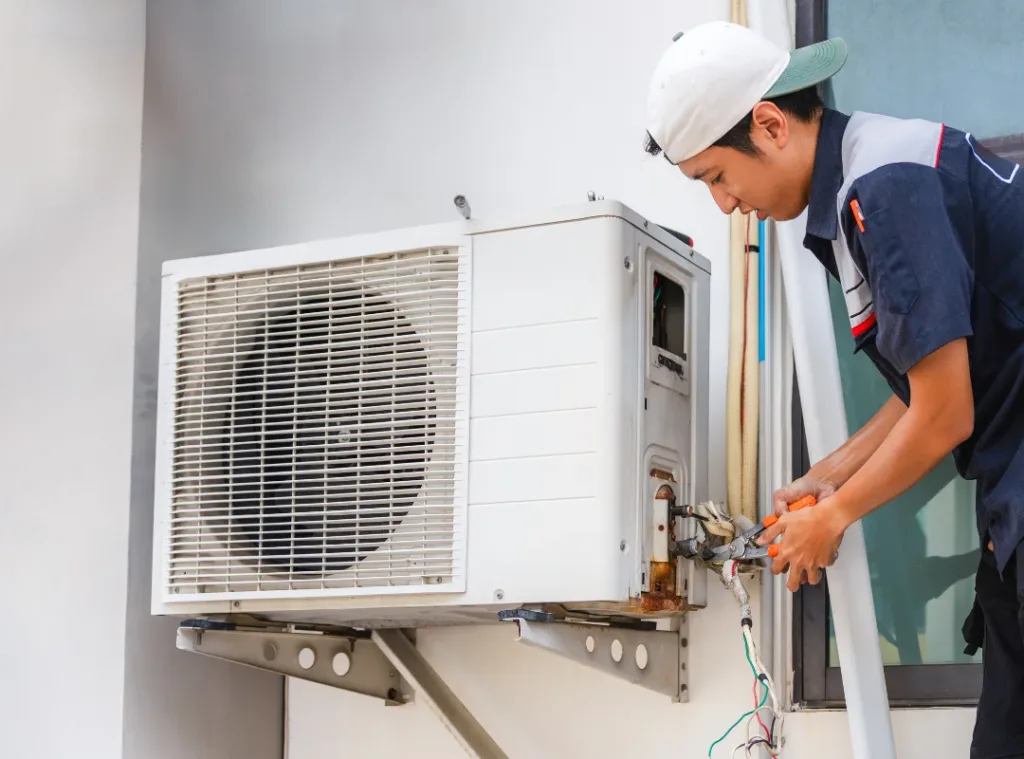
- Proper insulation
- Sealed ductwork
- Clean filters
- Appropriate equipment sizing
All can also influence how much cooling power is required.
Keeping blinds or curtains closed during times of strong sunlight can reduce the amount of heat entering through windows. Ceiling fans can also make occupants feel more comfortable at a slightly higher thermostat setting, although fans do not actually lower the temperature of the rooms.
Is Running the AC All Day Bad for the System?
An air conditioner running for long periods is not necessarily a sign of a problem. During very hot weather, extended operation can be normal because the system is dealing with a heat load.
However, an AC unit that runs for unusually long times without reaching the thermostat setting may indicate an issue with:
- Refrigerant levels
- Equipment capacity
- Airflow
- Insulation
- AC unit component
Conclusion
In most situations, keeping your AC system at the same low temperature while the home is empty is not the most energy-conscious option. Raising the thermostat several degrees during longer absences can lower energy consumption because the system has less heat to remove. A steady temperature can still be useful when people are home, but adjusting the setting around your schedule can decrease unnecessary cooling and save money on electricity.
Green Street HVAC: AC Repair, Replacement, Installation
For questions about AC Repair, AC Installation, HVAC Maintenance, or Thermostat Repair and Installation, call Green Street HVAC in Springfield, Tennessee. Our services can fix cooling performance, thermostat operation, and HVAC system maintenance related to household temperature control. Contact us to schedule service.
FAQs
1. Is It Cheaper to Leave the AC On or Turn It On and Off?
For longer periods when nobody is home, raising the thermostat or turning the AC off can use less energy than maintaining a low temperature.
2. What's the Cheapest Way to Run Your AC?
Set the thermostat at a comfortable temperature rather than an unnecessarily low setting. Raise it when your home is empty, and keep the HVAC system properly maintained.
3. What Happens if I Leave My AC on All Day?
The AC system cycles as needed to maintain the thermostat setting. On hot days, it may run for an extended time, resulting in greater electricity usage.
4. The AC system cycles as needed to maintain the thermostat setting. On hot days, it may run for an extended time, resulting in greater electricity usage.
During very hot weather, extended operation can be normal. If your cooling system runs for around 20 hours without reaching the selected temperature, an HVAC inspection is needed.
5. What Is the Best AC Temperature for a Lower Bill?
A commonly recommended starting point is around 78°F when people are home, with a higher setting when your home is empty. Personal comfort and local weather also matter.

Proud To Be Your No. 1 HVAC Company

Quality
From the way we insulate our ductwork, to the running of the copper refrigeration pipe – our quality is like no other. We spend as much time as we need to insure that our jobs are done perfect. When choosing Green Street you know the job will be done right – on time – and always within your budget.

All Makes & Models
Green Street’s certified technicians are experienced and trained to service, maintain, install and repair all makes and models of commercial air conditioning & heating equipment.

Expertly Trained
Each one of our lead technicians have years of experience in all aspects of HVAC service in Nashville. It is mandatory for each technician to complete a full in house training calendar to insure that they are up to date on the latest residential air conditioning & heating equipment.
24 Hours a Day, 7 Days a Week.