
Covid-19 Response: Green Street is committed to protecting your health and safety. Learn More
Air-Source vs. Ground-Source Heat Pump
The key difference between an air source and a ground source heat pump is their method of heating and cooling systems. As the name suggests, air source pumps use outside air to perform their duties, while ground source pumps use the earth’s temperature to do so. This requires extensive underground installation but offers higher, more consistent efficiency and lower running costs, though at a significantly higher upfront price.
Ground Source vs. Air Source Heat Pumps
Wondering if a heat pump is right for you? Both air-source and ground-source heat pumps work by using refrigerant to transfer heat rather than generate it, making them super efficient for your home’s heating and cooling.
Air-source systems pull heat from the outside air, while ground-source systems use the steady temperature underground for even better performance. The big question is: could your home benefit more from the simplicity of an air-source system or the long-term savings of a ground-source setup?
Environmental Impact
For this factor, the ground source pump wins. One of their primary advantages is less environmental impact compared to traditional gas boilers. Why? They use renewable energy like wind or solar to power their systems. Additionally, their higher efficiency enables them to provide twice the warmth in cold weather as conventional systems.
In particular, ground source heat pumps outperform air source heat pumps in nearly all buildings, resulting in minimal energy usage. Their exact environmental impact depends on various factors such as ground thermal properties, climate conditions, and electricity mix.
Noise
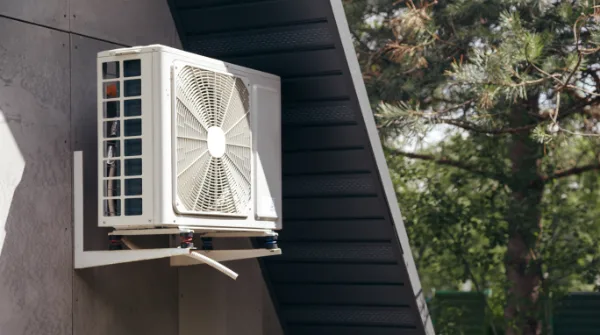
Air-source heat pumps produce noise from fans and compressors. It depends on fan type, speed, and system design. Modern systems are quieter because of the noise cancellation options. Outdoor air-source heat pump units typically feature sound ratings of 60 decibels, which is comparable to rainfall or conversation.Ground-source heat pumps have a big advantage when it comes to noise. Unlike air-source systems, they don’t rely on large outdoor fans or compressors exposed to the air. Most of the noisy components are either underground (the loop system) or located inside your home in a well-insulated unit.24 Hours a Day, 7 Days a Week.
Heat Pump Installation
Installation of an air-source heat pump should be straightforward. A professional will assess your property and identify an ideal ducting layout before providing any necessary advice on any planning considerations.
Ground-source heat pumps can be more complex installations. Ducting is installed underground through boreholes or horizontal loops drilled into the soil, often beneath existing landscaping and grass. To ensure a long life for your heat pump, learn how to properly protect it.
Benefits of Air Source Heat Pumps
Now, let’s understand the overall benefits of air source heat pumps. This will help you choose something that suits your needs and requirements.
Energy Efficiency
Air source heat pumps offer renewable heating that also protects the environment and enhances local air quality. ASHPs reduce household carbon footprints by as much as 40% compared with traditional electric resistance heating systems, or up to 92% when compared with oil or propane heating solutions.
Heat pumps may be installed as an efficient replacement for furnace and air conditioning appliances, saving upfront costs while simplifying installation time and complexity. Homeowners should consult a professional to make sure that their heat pump meets their home’s specific requirements. Otherwise, it could waste energy by cycling on and off excessively or may operate less efficiently than it could.
Environmental Impact
Air-source heat pumps use less energy than traditional heating and cooling systems, resulting in lower greenhouse gas emissions. Instead of traditional fossil-fuel-based heating systems, ASHPs use electricity generated from non-carbon sources, such as nuclear power.
Heat pumps take advantage of refrigerant flow through indoor and outdoor coils to harvest thermal energy from the atmosphere, much like refrigerators do. Each coil holds liquid refrigerant, which, at low temperature and pressure, absorbs ambient heat before changing from cold liquid into a hot gas. Hence, a stable cooling and heating system.
Maintenance
Effective air source heat pumps (ASHPs) can produce three times as much heat as they consume, significantly cutting household energy bills. As such, ASHPs make an excellent investment for energy-conscious homeowners seeking to upgrade older systems that rely on fossil fuels.
Like all heating and cooling systems, ASHPs require regular HVAC maintenance for optimal performance. A professional maintenance service should be conducted annually to ensure your ASHP is operating at peak efficiency.
This inspection ensures your heat pump is operating at optimal performance – minimizing wear and tear that could eventually cause more serious problems down the road.
LOOKING TO REPAIR, REPLACE OR UPGRADE?
Our experts can walk you through every step of the way, from prospected which tailored solution would be best for you, to installing and maintaing it…
Benefits of Geothermal Heat Pump
Geothermal systems are an eco-friendly, efficient heating option with double-duty capability; both as a heating source and as an air conditioner.
GSHPs offer many advantages, from reduced carbon emissions and property value increases to possible rebates available.
Energy Efficiency with Electric Heating & Cooling
Ground-source heat pumps are highly energy-efficient. By extracting heat from an underground source and using it both for heating and cooling purposes, they consume roughly 50% less energy than fossil fuel systems.
GSHPs are more energy efficient and consistent than other methods of heating and cooling, cutting energy costs while creating more even temperatures throughout your home. Furthermore, these units allow zoning options so you can set different areas to different temperatures to further lower utility bills.
Reduced Carbon Footprint
Ground-source heat pumps boast much lower carbon emissions than traditional heating systems like oil furnaces or air conditioners. Instead of burning fossil fuels for heating and cooling purposes, which produce carbon dioxide emissions, ground-source heat pumps utilize electricity from renewable energy sources, such as solar or wind power production, to achieve similar effects.
GSHPs produce less greenhouse gas than air conditioners and oil furnaces, but the exact number is determined by how much energy is consumed. For instance, residential GSHPs consuming 10 units of electricity annually produce 5 tons less carbon than traditional oil furnaces.
Conclusion
Both air-source and ground-source heat pumps offer significant advantages over traditional heating systems. But the right choice depends on your home, budget, and long-term priorities. If you’re looking for a simpler, lower-cost installation with solid efficiency gains, an air-source heat pump might be the perfect fit. Ground-source heat pumps, on the other hand, are ideal if you’re ready to invest in a long-term, high-efficiency solution.
Schedule Your Heat Pump Tune-Up with Green Street HVAC
When was the last time you gave your heat pump a little attention? If you can’t remember, it’s probably overdue. Green Street HVAC provides heat pump maintenance. So you don’t have to worry about unexpected breakdowns when you need heating or cooling the most. Our heat pump maintenance service is more than a quick filter check. We inspect every part of your system. Contact us now!

Proud To Be Your No. 1 HVAC Company

Quality
From the way we insulate our ductwork, to the running of the copper refrigeration pipe – our quality is like no other. We spend as much time as we need to insure that our jobs are done perfect. When choosing Green Street you know the job will be done right – on time – and always within your budget.

All Makes & Models
Green Street’s certified technicians are experienced and trained to service, maintain, install and repair all makes and models of commercial air conditioning & heating equipment.

Expertly Trained
Each one of our lead technicians have years of experience in all aspects of HVAC service in Nashville. It is mandatory for each technician to complete a full in house training calendar to insure that they are up to date on the latest residential air conditioning & heating equipment.
24 Hours a Day, 7 Days a Week.