Do I Really Need a Thermostat With an Aux Heat Terminal?
Basics of Auxiliary Heat in a Heating System
Auxiliary heat is a secondary heating function that supports a heat pump when it struggles to meet demand. Heat pumps move heat from outside air rather than creating it directly. When outdoor temperatures drop, that process becomes harder.
At that point, the system may activate aux heat to help reach the desired temperature indoors. This extra heat usually comes from electric heat strips or another built-in heating method.
What the Aux Heat Terminal Does
The aux heat terminal on a thermostat signals the system to activate auxiliary heat. Without this connection, the thermostat cannot request help from the backup heating components.
A thermostat designed for heat pumps includes this terminal to manage transitions between standard heating and support heat. Systems without auxiliary heat do not require this feature.

Heat Pump Performance & Outdoor Temperature
A heat pump performs best in mild conditions. As the outdoor temp drops, heat transfer slows. When indoor demand rises faster than the system can supply warmth, auxiliary heat running may occur. This generally happens during:
- Cold weather
- Early morning temperature recovery
- Sudden drops in outdoor temperatures
Electric Heat Strips as a Secondary Heat Source
Most residential heat pumps rely on electric heat strips as a secondary heat source. These heating elements warm the air directly as it passes through the air handler.
Because electric heat uses heavy power, the auxiliary heat cost is higher than standard heat pump operation. This makes proper thermostat control important for managing energy costs.
Auxiliary Heat vs Emergency Heat
Auxiliary heat and Emergency heat are generally confused but serve different roles.
- Emergency heat is manually selected
- Aux heat activates automatically when needed
Emergency mode shuts down the outdoor unit and runs only the backup heating system. You can use this setting if your outdoor equipment fails or during extreme cold.

Why the Aux Heat Indicator Matters
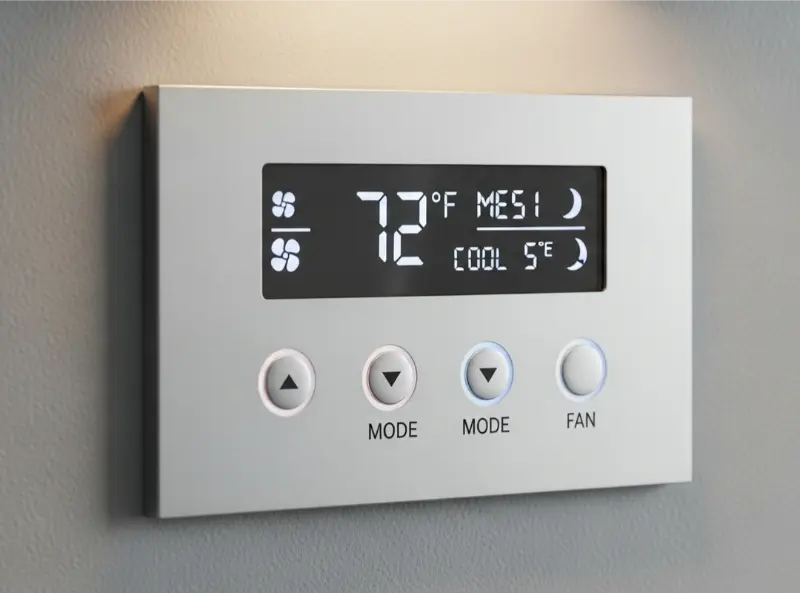
Many thermostats include an aux heat indicator that alerts homeowners when backup heat is active. This visual cue helps you track system behavior and identify rising energy use.
Frequent activation may signal that your heat pump system is struggling due to thermostat programming, equipment issues, or low outdoor temperatures.
Thermostat Settings & Heat Mode Behavior
Dual Fuel Systems & Aux Heat Terminals
Defrost Cycles & Temporary Heat Loss
During winter, heat pumps enter defrost cycles to remove ice buildup on the outdoor coil. During this time, the system briefly switches to defrost mode.
Auxiliary heat activates during defrost to keep indoor temperatures stable. Without auxiliary heat support, homeowners may feel cool air from vents during these cycles.
When You Do Not Need an Aux Heat Terminal
Not every home requires a thermostat with aux heat capability. Homes using:
- Only a gas furnace
- Only electric furnaces without heat pumps
- Radiant or boiler systems
Do not rely on auxiliary heat stages. In these cases, simpler thermostat designs are sufficient.
Signs You Need a Thermostat With Aux Heat Support
You likely need aux heat compatibility if:
- Your home uses a heat pump
- You see an aux heat indicator on your current thermostat
- Your system includes heat strips or a secondary heat source
- Your area experiences extended cold weather
If you use the wrong thermostat, your system might struggle to keep your home warm or even experience extra wear and tear.
Auxiliary Heat Running & Energy Costs
When auxiliary heat running becomes frequent, energy costs increase. Electric heat strips draw large amounts of power compared to heat pump operation.
Monitoring the behavior of your thermostat and understanding when aux heat activates helps you manage usage and recognize potential system issues.
Conclusion
Thermostat & Heat Pump Services by Green Street HVAC
Green Street HVAC provides professional Thermostat Repair & Installation, and Heat Pump services for homes using auxiliary heating systems. Their technicians also offer HVAC Maintenance, Furnace Repair, and HVAC Preventive Maintenance to help heating systems operate reliably through cold seasons.
Upgrading your thermostat or experiencing aux heat issues? Give us a call today to schedule service and get expert guidance.